
You walk into the garage, utility closet, or water heater room and see water where it should not be. If your first thought is, why is my water heater leaking, you are not overreacting. Even a small puddle can point to anything from a loose connection to a failing tank, and the longer it sits, the more damage it can cause to flooring, walls, and nearby fixtures.
The good news is that not every leak means you need a full replacement. The bad news is that some leaks do, and waiting too long usually makes the repair more expensive. The key is figuring out where the water is coming from and how serious the problem is.
Why is my water heater leaking from the top, side, or bottom?
The location of the leak tells you a lot. Water heaters can leak from plumbing connections, valves, internal components, or the tank itself. Some issues are straightforward. Others are a clear sign the unit is at the end of its life.
If the leak is coming from the top, you may be dealing with a loose cold water inlet or hot water outlet connection. These fittings can drip over time, especially in older systems or after pressure changes. In some cases, corrosion around the connection can also let water escape.
If water is showing up along the side, the temperature and pressure relief valve could be the problem. This valve is designed to release water if pressure or temperature gets too high inside the tank. A little discharge from time to time can happen, but steady leaking is a warning sign. The valve itself may be faulty, or the heater may be dealing with excess pressure, overheating, or an expansion issue in the plumbing system.
If the leak appears near the bottom, the situation can go in two very different directions. It might be a drain valve that is loose or worn out, which is often repairable. Or it might be the tank itself leaking because the internal lining has cracked or rusted through. Once the tank body fails, repair is usually not the right answer.
The most common reasons a water heater leaks
One of the most common causes is a bad connection. Water lines feeding the heater and carrying hot water out can loosen, especially over years of heating and cooling cycles. These leaks often start small and get worse slowly.
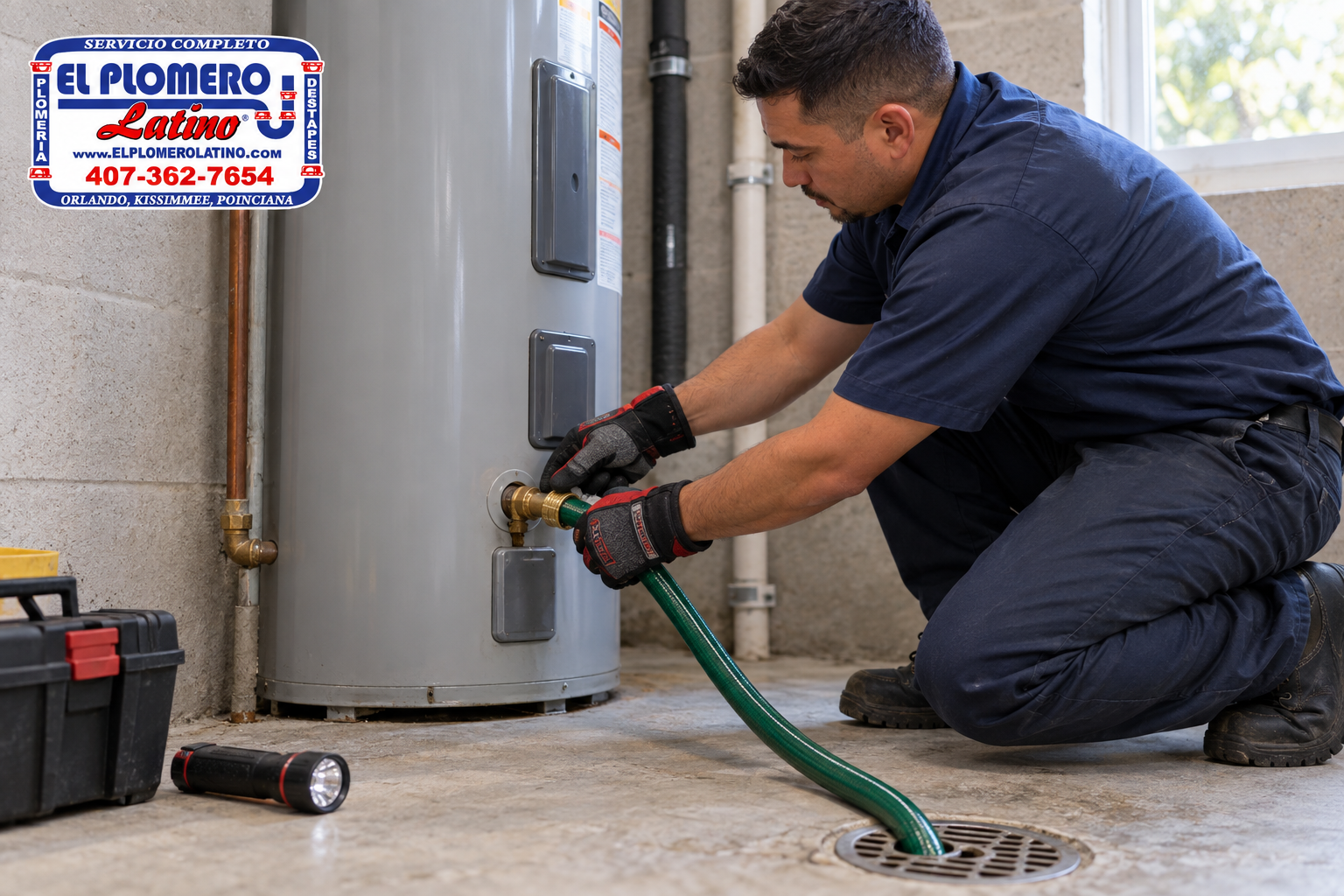
Another frequent issue is the drain valve. This valve sits near the bottom of the tank and is used when flushing the heater. If it is not fully closed, or if sediment and age have damaged it, water can drip or pool around the base.
The temperature and pressure relief valve is another major suspect. This safety device matters because it protects the heater from dangerous pressure buildup. If it leaks, replacing the valve may solve the problem, but a plumber should also check why it is opening in the first place. Treating the symptom without addressing the cause can lead to repeat leaks.
Sediment buildup is a big issue in Florida homes. Minerals in the water settle at the bottom of the tank over time. That sediment makes the heater work harder, traps heat, and can damage the tank lining. It can also cause popping or rumbling noises before a leak starts. In many homes, what looks like a sudden water heater failure has actually been building for years.
Age is another major factor. Most standard tank water heaters last around 8 to 12 years, depending on water quality, maintenance, and usage. If your unit is already in that range and leaking from the tank body, replacement is usually the most practical and cost-effective option.
What to check before you panic
Start by confirming the water is really coming from the heater. Sometimes nearby pipes, an air conditioning drain line, or even condensation can make it look like the water heater is leaking when it is not.
Next, dry the area as much as you can and look closely. Check the fittings at the top, the relief valve on the side, and the drain valve near the bottom. If you can safely see exactly where fresh water is forming, you will have a much better idea of what is going on.
If your unit is electric, turn off power at the breaker before getting too close to standing water. If it is gas, avoid trying to inspect anything involving the burner or gas line unless you know exactly what you are doing. Safety comes first.
You can also shut off the cold water supply to the heater if the leak is active. This usually stops more water from entering the tank and can limit damage while you wait for service. If the leaking is heavy, move anything valuable away from the area right away.
When a leak is repairable and when it is not
This is where it depends on the source of the problem. A leaking connection, drain valve, or relief valve can often be repaired without replacing the entire unit. In those cases, the heater itself may still have useful life left.
But if the inner tank has corroded and the steel body is leaking, there is no reliable patch that turns that into a long-term fix. Once the tank fails, replacement is the honest answer. Quick patches may slow the drip for a short time, but they do not restore the structural integrity of the heater.
There is also a gray area with older units. Let us say the leak is technically coming from a replaceable part, but the water heater is 11 years old, rusty, and showing signs of wear. Repair might be possible, but it may not be the best use of your money. A good plumber should explain both options clearly so you can make the right call for your home or property.
Why delaying a leaking water heater is risky
A slow leak has a way of becoming tomorrow’s emergency. Water damage spreads quietly. Drywall, trim, cabinets, flooring, and baseboards can all absorb moisture before you realize how far it has gone. In commercial settings, even a small utility room leak can interrupt business operations or create liability concerns.
There is also the risk of mold, especially in warm, humid Central Florida conditions. A leak under or around the water heater can create the kind of damp environment mold loves. What started as a plumbing issue can turn into a cleanup and restoration issue fast.
And if the relief valve is leaking because pressure is too high, ignoring it means ignoring a safety problem. Water heaters are built with protective components for a reason. When one starts acting up, it should be checked, not dismissed.
Why is my water heater leaking if it still works?
This is a common question because many homeowners assume that as long as they still have hot water, the heater cannot be in serious trouble. Unfortunately, a tank can keep heating water while still leaking.
A small external leak from a fitting or valve may not affect performance much at first. Even a corroding tank can continue producing hot water until the damage gets worse. That is why a working water heater should not be mistaken for a healthy one.
If the unit is leaking and still heating, think of that as a short window to address the issue before it gets more expensive. It is not a sign that everything is fine.
What a professional plumber will usually look for
A proper diagnosis is about more than spotting the puddle. A plumber will usually check the age of the unit, inspect visible corrosion, test valves, evaluate pressure conditions, and look at the overall installation. If the heater is in a pan, they may also check whether the pan is catching overflow from a slow leak or from another source.
For homes, condos, restaurants, and commercial properties, the right solution depends on usage, code requirements, and the condition of the surrounding plumbing. That is one reason a fast guess over the phone is not always enough. You want someone who can tell you whether the issue is a repair, a replacement, or a bigger system problem.
At El Plomero Latino Inc., that means giving you a clear explanation, upfront pricing, and a recommendation based on what actually protects your property long term.
What to do right now if your water heater is leaking
If you see active leaking, turn off power to the unit if it is safe to do so, shut off the cold water supply, and clear the area around the heater. Take note of where the water seems to be coming from, but do not try to take apart valves or fittings unless you are confident in what you are doing.
A leaking water heater is one of those problems that gets easier to deal with the sooner you address it. Sometimes the fix is simple. Sometimes replacement is the better path. Either way, getting an honest assessment early can save you from water damage, stress, and a much bigger plumbing bill later.