
A cold shower is frustrating. A leaking water heater, a sulfur smell, or a popping sound from the utility closet can be much more serious. Water heater repair is often straightforward when the problem is caught early, but delaying service can lead to water damage, higher energy bills, and an unexpected replacement when you least need one.
For homeowners, landlords, restaurants, and commercial property managers, the goal is not to guess at the problem. It is to know what requires a quick professional inspection, what can be checked safely, and when replacement makes better financial sense than another repair.
When Water Heater Repair Is Needed
Your water heater works quietly until it does not. Most warning signs begin small: water takes longer to heat, the supply runs out sooner, or the unit makes a new noise. These changes are worth addressing before they become an emergency.
A lack of hot water can come from different causes depending on the type of unit. On an electric water heater, a failed heating element, thermostat issue, tripped breaker, or wiring concern may be involved. On a gas unit, the issue may be related to the pilot light, thermocouple, burner assembly, gas supply, or venting. Tankless systems have their own set of possibilities, including mineral buildup, ignition problems, error codes, or undersized equipment for the building’s demand.
If the water is only lukewarm, first consider whether your household or business has recently used more hot water than usual. A busy morning, multiple guests, laundry, or heavy kitchen use can temporarily empty a conventional tank. If the problem keeps happening under normal use, it is time for a professional diagnosis.
Strange sounds are not always harmless
Popping, rumbling, crackling, or banging from a tank-style heater often points to sediment at the bottom of the tank. Central Florida water can carry minerals that settle over time, especially when a heater has gone years without maintenance. The burner or heating element then has to work through that layer, which can reduce efficiency and put extra stress on the unit.
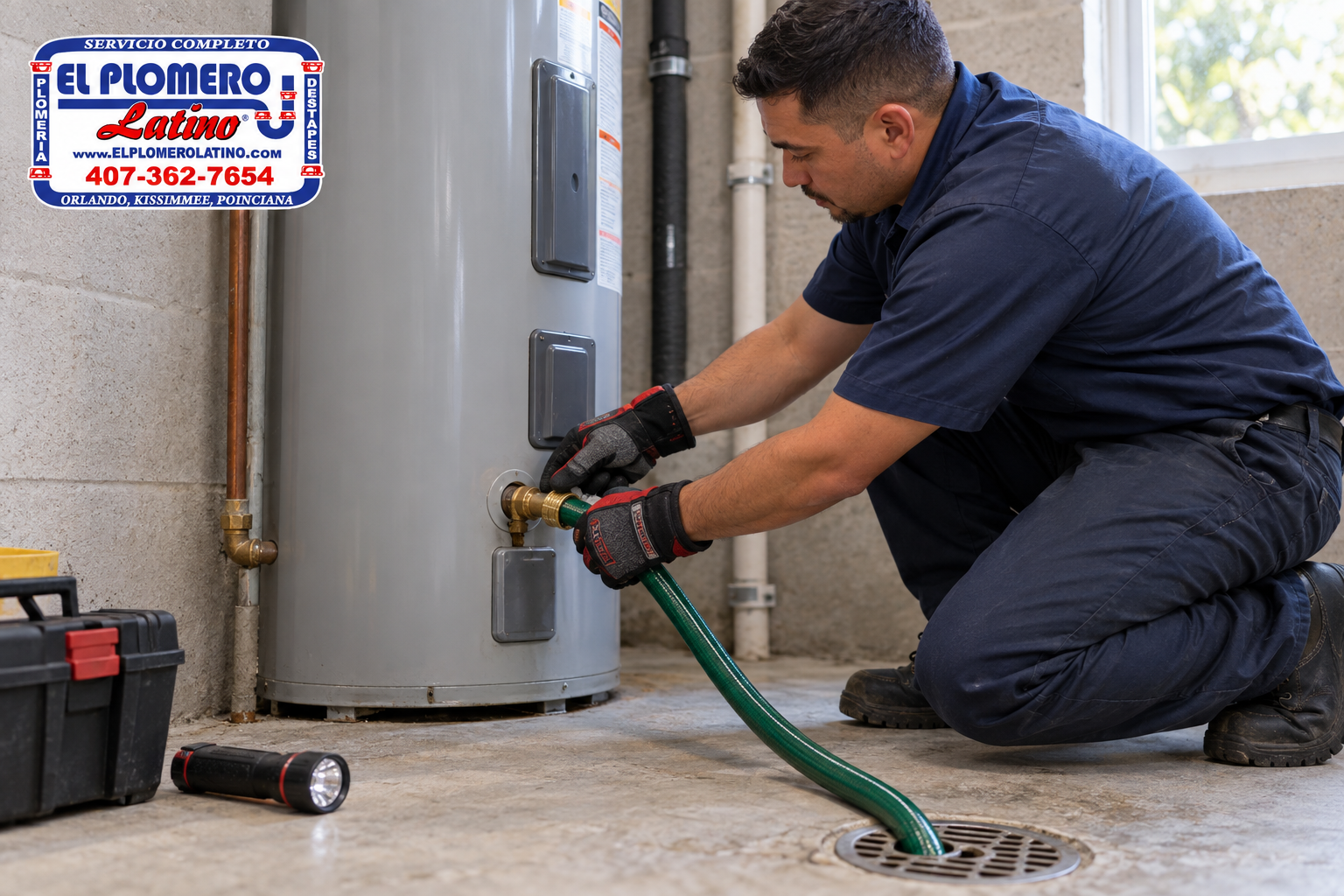
A flush may help if the buildup is caught early. However, an older tank with heavy corrosion or severe sediment may not respond well to a late flush. This is one reason an honest inspection matters: the right answer depends on the tank’s condition, age, and safety, not just the noise itself.
Discolored or smelly hot water needs attention
Rust-colored water from the hot side of a faucet may indicate corrosion inside the water heater tank or deteriorating components. If both hot and cold water are discolored, the cause could be elsewhere in the plumbing system. A plumber can narrow down the source rather than replacing equipment unnecessarily.
A rotten-egg smell can also come from the water heater, particularly when bacteria interact with the anode rod inside the tank. The repair may involve replacing the anode rod and treating the system, but the solution depends on the water source and the condition of the equipment. Do not ignore strong odors, especially in a restaurant, rental property, or facility where dependable hot water is part of daily operations.
A Water Heater Leak Is a Reason to Act Quickly
Not every drip means the tank has failed, but every leak deserves a closer look. Water may come from a loose supply connection, a temperature and pressure relief valve, a drain valve, condensation, or the tank itself.
A leak at a connection may be repairable. A relief valve may be releasing water because the valve is worn, the water pressure is too high, or there is a temperature problem that needs immediate attention. Water pooling around the bottom of a tank is more concerning. If the tank liner has corroded through, the tank cannot be safely repaired and replacement is usually the practical option.
If you see active leaking, protect the area around the heater and call for service promptly. If water is spreading, shut off the water supply to the heater if you can do so safely. For an electric unit, turn off power at the breaker. For a gas unit, do not attempt burner or gas-line repairs yourself. If you smell gas, leave the area and contact the appropriate emergency utility service before arranging plumbing repairs.
Repair or Replace? The Answer Depends on the Unit
Homeowners understandably want to repair an appliance before replacing it. In many cases, that is the right move. Heating elements, thermostats, pressure relief valves, anode rods, expansion tanks, and some gas-control components can be replaced when the tank itself remains in good condition.
The decision changes when the tank is leaking, heavily corroded, or nearing the end of its expected service life. Traditional tank water heaters commonly last about eight to 12 years, though water quality, maintenance, installation quality, and usage all affect that range. Tankless units can last longer, but they still need periodic descaling and professional service.
Replacement may also make sense when your current heater is too small for your needs. A growing family, a remodeled bathroom with a larger tub, a new dishwasher, or increased demand in a commercial kitchen can expose capacity problems that were not obvious before. Installing the same size unit may cost less upfront but leave you with the same frustrating shortage of hot water.
A qualified plumber should discuss the trade-offs clearly: repair cost, remaining equipment life, energy use, capacity, installation requirements, and available budget. Flat-rate upfront pricing gives you room to make that decision without worrying about surprise charges after the work begins.
Safe Checks You Can Make Before Calling
There are a few basic observations that can help speed up a service visit. Check whether your electric unit’s breaker has tripped, but do not repeatedly reset a breaker that keeps shutting off. Look for visible water around the heater, listen for unusual sounds, and note whether the issue affects every hot-water fixture or only one faucet or shower.
For gas units, confirm whether the pilot light is on only if you can do so without removing panels or handling gas components. Follow the manufacturer’s instructions on the unit, and never use a flame to check for a gas leak. A gas odor, damaged vent pipe, soot, or a yellow burner flame requires professional attention.
Avoid turning a water heater back on if the tank may be empty or if there has been flooding around electrical components. Running an electric heater without sufficient water can burn out its elements. Small decisions made during an emergency can turn a repairable issue into a larger one.
Preventing Future Water Heater Problems
Maintenance is less dramatic than an emergency call, but it can save money and protect your property. A professional water heater service can include checking connections, testing safety components, reviewing venting where applicable, looking for corrosion, and flushing sediment when appropriate for the unit’s condition.
For property managers and business owners, scheduled inspections are especially useful. A failed water heater can disrupt tenant comfort, close restroom facilities, slow down kitchen operations, or create damage claims. Planning service around the building’s schedule is usually far easier than responding to a flooded mechanical room.
Water pressure also matters. Excessively high pressure can strain plumbing fixtures, supply lines, and a water heater’s safety systems. If relief valves are leaking or fixtures seem to fail often, have the pressure evaluated instead of replacing parts one by one.
Dependable Help for Orlando-Area Homes and Businesses
Water heater problems are rarely convenient, but the repair process should be clear. El Plomero Latino Inc. provides straightforward water heater service with respectful communication, professional workmanship, flat-rate pricing, and a commitment to doing the job right the first time. Hablamos Español.
Whether the issue is a pilot light that will not stay on, a heater that runs out of hot water too quickly, or water collecting beneath the tank, early service gives you more options. A timely inspection can protect your home or business, help you avoid wasted energy, and make the next hot shower one less thing to worry about.