

A cold shower is often the first sign homeowners notice, but a water heater rarely fails without warning. This water heater lifespan guide can help you understand what is normal, what is preventable, and when replacement is the safer financial decision for your home or business.
For families in the Orlando area, a reliable supply of hot water supports everyday routines: showers, laundry, dishes, and cleaning. For restaurants, rental properties, and commercial facilities, a failing water heater can quickly become an interruption that affects tenants, employees, or customers. Knowing the expected service life of your system makes it easier to plan ahead instead of facing an emergency replacement after a leak.
How Long Does a Water Heater Last?
Most traditional tank water heaters last about 8 to 12 years. Some may run longer with consistent maintenance, favorable water conditions, and moderate use. Others can fail sooner due to sediment buildup, corrosion, improper installation, or a neglected safety component.
Tankless water heaters generally last 15 to 20 years, sometimes longer when they are professionally maintained. Because they heat water on demand rather than holding a tank full of hot water around the clock, they do not face the same constant tank-corrosion risk. However, tankless units still need periodic flushing and service, especially where mineral content in the water causes scale.
The fuel source matters, but it is not the only factor. Gas and electric tank units can both provide years of dependable service. The quality of the installation, the condition of the water supply, and how quickly small problems are addressed usually have a bigger effect on lifespan than the label on the unit.
Your Water Heater Lifespan Guide: What Affects It Most
A water heater works quietly, so it is easy to forget until something goes wrong. But several conditions inside and around the unit determine whether it reaches its expected lifespan.
Sediment buildup inside the tank
Minerals naturally present in water settle at the bottom of a storage tank over time. This sediment creates a barrier between the burner or heating elements and the water. The system must work harder to produce hot water, which can raise energy use and put added stress on the equipment.
You may hear popping, rumbling, or crackling from the tank as sediment builds. Those sounds do not always mean immediate failure, but they should not be ignored. A professional flush can remove sediment in many cases, though a heavily neglected or corroded tank may be beyond saving.
Corrosion and anode rod wear
Traditional water heaters contain a sacrificial anode rod designed to corrode before the steel tank does. Once that rod is depleted, the tank itself becomes more vulnerable to rust. A corroded tank cannot be repaired safely. If water is leaking through the tank body, replacement is the right solution.
Checking the anode rod at appropriate intervals can extend the useful life of some tank units. It is a small component with a major job, and it is much less expensive to address before the tank begins to deteriorate.
High demand and unit sizing
A water heater that is too small for the household or business will work harder than it should. Long showers, multiple bathrooms, frequent laundry, commercial dishwashing, and peak-use periods all add demand. An undersized unit may recover slowly, run more often, and wear out sooner.
On the other hand, buying the biggest available tank is not automatically the best answer. Oversizing can increase upfront and operating costs. The right choice depends on the number of occupants, fixtures, appliances, usage habits, fuel type, available space, and hot-water demand at busy times.
Installation quality and ventilation
Water heaters involve water connections, electrical or gas connections, drainage, pressure relief protection, and, for many gas models, proper venting. Errors in any of these areas can shorten equipment life and create safety concerns.
Professional installation helps ensure the unit is sized correctly, connected properly, and set up according to local requirements. This matters even more in commercial settings, where demand and system complexity can be much higher.
Signs Your Water Heater May Need Replacement
Age alone does not always mean replacement is necessary. A well-maintained 10-year-old unit may still be operating safely, while a younger tank with corrosion or a significant leak may need immediate attention. The condition of the system tells the fuller story.
Call a plumber promptly if you notice rusty or discolored hot water, water pooling near the base of the tank, a persistent metallic smell, or unusual noises during heating. A leak from a pipe fitting, valve, or pressure relief line may be repairable. Water leaking from the tank itself is usually a sign that the tank has failed.
Inconsistent hot water is another reason to schedule an evaluation. The cause could be a heating element, thermostat, burner issue, sediment buildup, or a unit that can no longer meet your household’s demand. A professional inspection can separate a practical repair from a replacement that will save you from repeated service calls.
Higher utility bills can also be a clue. When an aging water heater loses efficiency, it may consume more gas or electricity to provide the same amount of hot water. This is not always caused by the water heater, but it is worth investigating when it appears alongside other symptoms.
Repair or Replace? Make the Decision With the Full Cost in Mind
Repair often makes sense when the unit is relatively young and the issue is limited to a replaceable part, such as a thermostat, heating element, valve, igniter, or minor connection. A repair can restore dependable operation without the cost of a new installation.
Replacement becomes more practical when a tank is near the end of its expected lifespan, has a leaking or corroded body, needs frequent repairs, or cannot provide enough hot water for current needs. Spending money on a major repair for an old unit can be difficult to justify if another component is likely to fail soon.
A tankless system may be worth considering for homes that want a longer-lasting unit and on-demand hot water. It can be a strong fit, but it is not the right answer for every property. Installation costs can be higher, and some homes need gas-line, venting, electrical, or water-treatment upgrades. A properly sized high-efficiency tank water heater can still be an excellent, dependable choice.
Simple Maintenance That Can Add Years
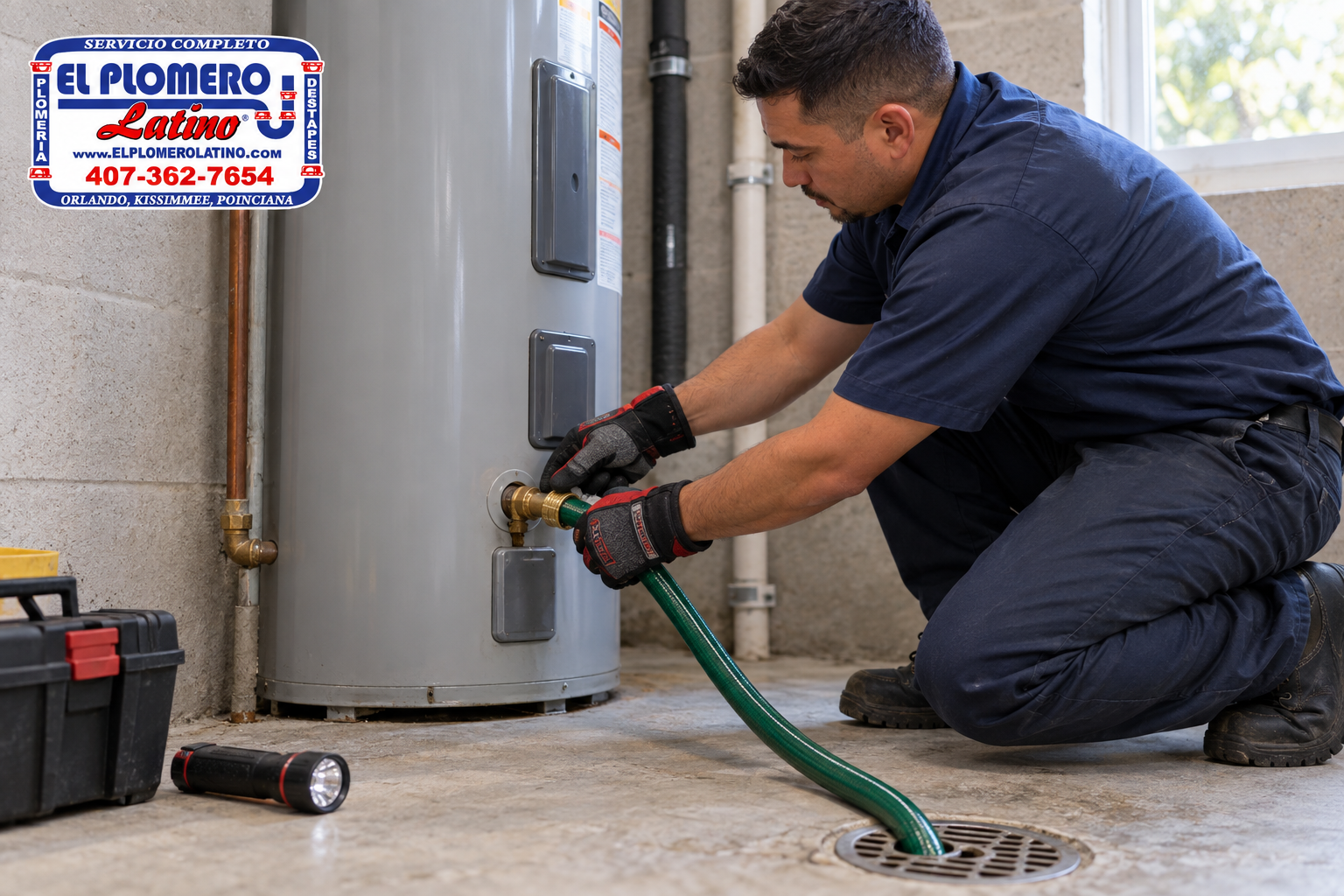
Water heater maintenance is less about complicated tasks and more about catching wear before it becomes damage. An annual professional inspection is a good starting point for many homeowners and property managers. The visit can include checking for leaks, testing safety components, inspecting connections, reviewing the anode rod when appropriate, and looking for signs of sediment or corrosion.
Tank water heaters may benefit from periodic flushing, depending on water conditions and manufacturer guidance. Tankless units should also be descaled or flushed on a regular schedule to prevent mineral buildup in the heat exchanger. Skipping maintenance does not guarantee failure, but it raises the chances of reduced efficiency and unexpected repairs.
Keep the area around the water heater clear and dry. Do not store boxes, chemicals, or combustible materials next to the unit. Check occasionally for moisture, rust, or changes in performance, and never ignore a pressure relief valve that is discharging repeatedly.
Planning Ahead Prevents a Hot-Water Emergency
If your tank water heater is approaching 8 to 12 years old, start paying closer attention even if it still seems fine. Locate the serial number and confirm the manufacture date, which is often encoded in the first characters of the serial number. Knowing its age gives you time to budget, compare options, and choose a replacement before a failure damages flooring, walls, or nearby belongings.
For rental properties and commercial facilities, planning is especially valuable. Replacing an aging system during a scheduled service window is far easier than responding to a flooded utility room or an outage during business hours. Keeping records of installation dates, repairs, and maintenance can make replacement planning more predictable.
When you are unsure whether a repair is worthwhile, ask for a clear explanation of the problem, the expected cost, and the remaining life of the unit. At El Plomero Latino Inc., we believe customers deserve straightforward recommendations, flat-rate pricing, and work that respects their home or business. A timely inspection today can protect your hot water, your property, and your peace of mind tomorrow.