

A kitchen sink clog rarely starts as a complete blockage. It often begins with water draining a little slower after dinner, a garbage disposal that hums without clearing the basin, or an unpleasant odor rising from the drain. Knowing how to unclog kitchen sink problems safely can save you a stressful cleanup – but the wrong method can damage pipes, seals, or your disposal.
The goal is not simply to make the water disappear for the moment. It is to remove the buildup causing the blockage without creating a larger plumbing repair. Start with the least aggressive option, pay attention to what the sink is telling you, and know when a recurring clog needs professional drain cleaning.
Before You Unclog a Kitchen Sink, Check for These Clues
First, stop running water into the sink. If one basin is full, avoid using the dishwasher or nearby fixtures until you know the drain is moving properly. Many kitchens have a dishwasher drain connected to the sink plumbing, and a serious blockage can send dirty water back where it does not belong.
Look at the pattern of the problem. A slow drain in one kitchen sink is often caused by grease, food residue, soap film, or debris in the trap. If both sides of a double-basin sink are backing up, the clog may be farther down the branch line. Water rising in the sink when the dishwasher runs, gurgling sounds, or backups affecting other drains can point to a larger drain or sewer line issue.
If you have already poured a chemical drain opener into the sink, do not plunge the drain or take apart the pipes right away. Those products can splash onto skin and eyes, damage certain plumbing materials, and leave hazardous liquid sitting in the trap. Tell a plumber exactly what was used if you need service.
How to Unclog a Kitchen Sink Step by Step
Clear the drain opening and disposal area
Put on gloves and remove standing water with a cup, small container, or wet/dry vacuum if you have one. Check the drain opening for visible food scraps, labels, twist ties, or other debris. Never put your hand inside a garbage disposal, even when it is switched off.
If the disposal is involved, turn off power at the wall switch and, when possible, the circuit breaker. Use tongs or pliers to remove visible items. Many disposals also have a reset button on the bottom and a manual turning socket underneath. Use only the wrench designed for that purpose, following the manufacturer instructions. If the disposal leaks, makes a grinding noise, or will not turn after debris is removed, stop there. Forcing it can turn a simple clog into a disposal replacement.
Flush with hot water and dish soap
For a sink that is draining slowly but still moving water, add a generous amount of grease-cutting dish soap to the drain. Then run hot tap water for several minutes. This can help loosen fresh grease and soap buildup coating the inside of the pipe.
Avoid pouring boiling water into a sink if you have PVC piping, older fittings, or a porcelain basin that may be vulnerable to sudden temperature changes. Hot tap water is the safer choice for most homes. It may help with a light grease buildup, but it will not solve a dense food clog or an object stuck in the line.
Use a sink plunger correctly
A flat-bottom sink plunger is one of the most useful tools for a kitchen drain clog. For a double-basin sink, seal the second drain tightly with a wet rag or stopper. Without that seal, the pressure you create will escape through the other side instead of pushing the clog loose.
Add enough water to cover the plunger cup, place it firmly over the drain, and pump steadily 15 to 20 times. Keep the seal tight. Then lift the plunger and see whether water begins to drain. Repeat a few times if needed, but do not keep plunging for an extended period if nothing changes. A stubborn blockage may be packed into the trap or located farther down the pipe.
Try baking soda and vinegar for mild buildup
For minor odor and light residue, pour about half a cup of baking soda into an empty drain, followed by half a cup of white vinegar. Cover the opening for 10 to 15 minutes, then flush with hot tap water.
This method is gentle and can freshen a drain, but it is not a replacement for professional cleaning when grease or food waste has formed a solid clog. Do not combine this method with commercial drain chemicals. Mixing products is unsafe and can create harmful fumes or splashing.
Clean the P-trap if you can do it safely
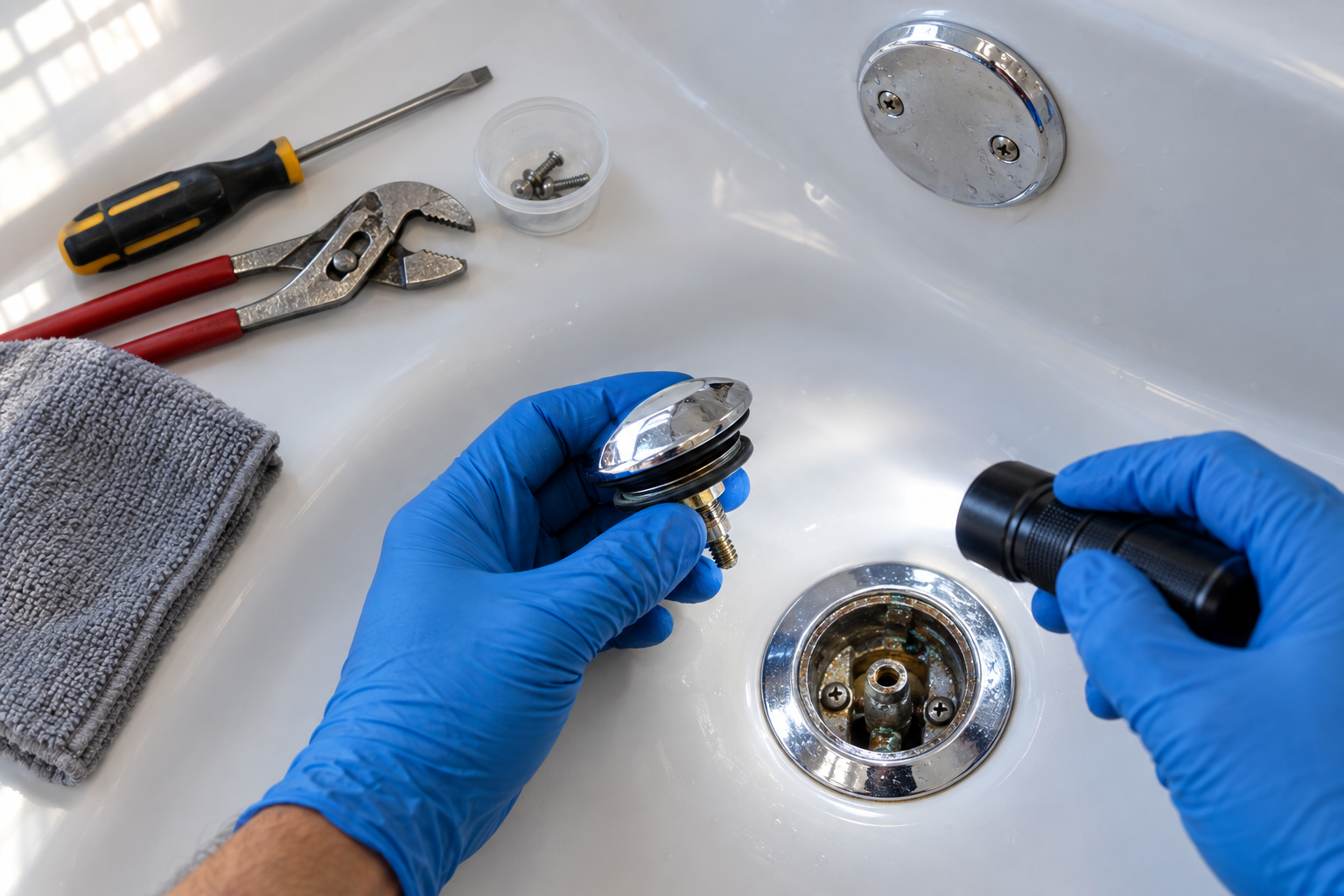
The curved pipe beneath the sink, called the P-trap, holds water to block sewer gases from entering the home. It is also a common place for food debris and grease to collect. If you are comfortable with a basic hands-on repair, place a bucket and towels under the trap, then carefully loosen the slip nuts and remove the curved section.
Empty the contents into the bucket and clean the trap with a brush. Check the short horizontal pipe leading into the wall as well, but do not push tools aggressively into the pipe. Reinstall the trap securely, run water slowly, and check every connection for leaks.
This approach works best for a clog close to the sink. If the trap is clear but the sink still backs up, the blockage is likely deeper in the drain line. That is the point where repeated DIY attempts can waste time and risk damaging fittings.
What Not to Put Down a Kitchen Sink
Kitchen drains are built for wastewater, not for disposing of every leftover from a meal. Even a garbage disposal cannot prevent grease and fibrous foods from collecting farther down the plumbing.
Keep these materials out of the drain whenever possible:
- Cooking grease, oil, butter, and bacon fat
- Coffee grounds, flour, rice, pasta, and eggshells
- Stringy vegetable scraps such as celery, corn husks, and onion skins
- Bones, fruit pits, seafood shells, and large food scraps
- Paper towels, wipes, stickers, and plastic packaging
Grease deserves special attention in Central Florida homes and restaurants. It may go down warm and liquid, but it cools as it travels through the pipe. Over time, it catches food particles and turns a narrow pipe into a recurring drain problem. Let grease cool in a container, then throw it in the trash instead.
When a Kitchen Sink Clog Needs a Plumber
A plunger or cleaned P-trap can handle many ordinary clogs. Still, there are situations where professional service is the safer and more cost-effective choice. Call for help if water will not drain after basic steps, the clog returns every few weeks, multiple drains are slow, or you notice sewage odors and bubbling from other fixtures.
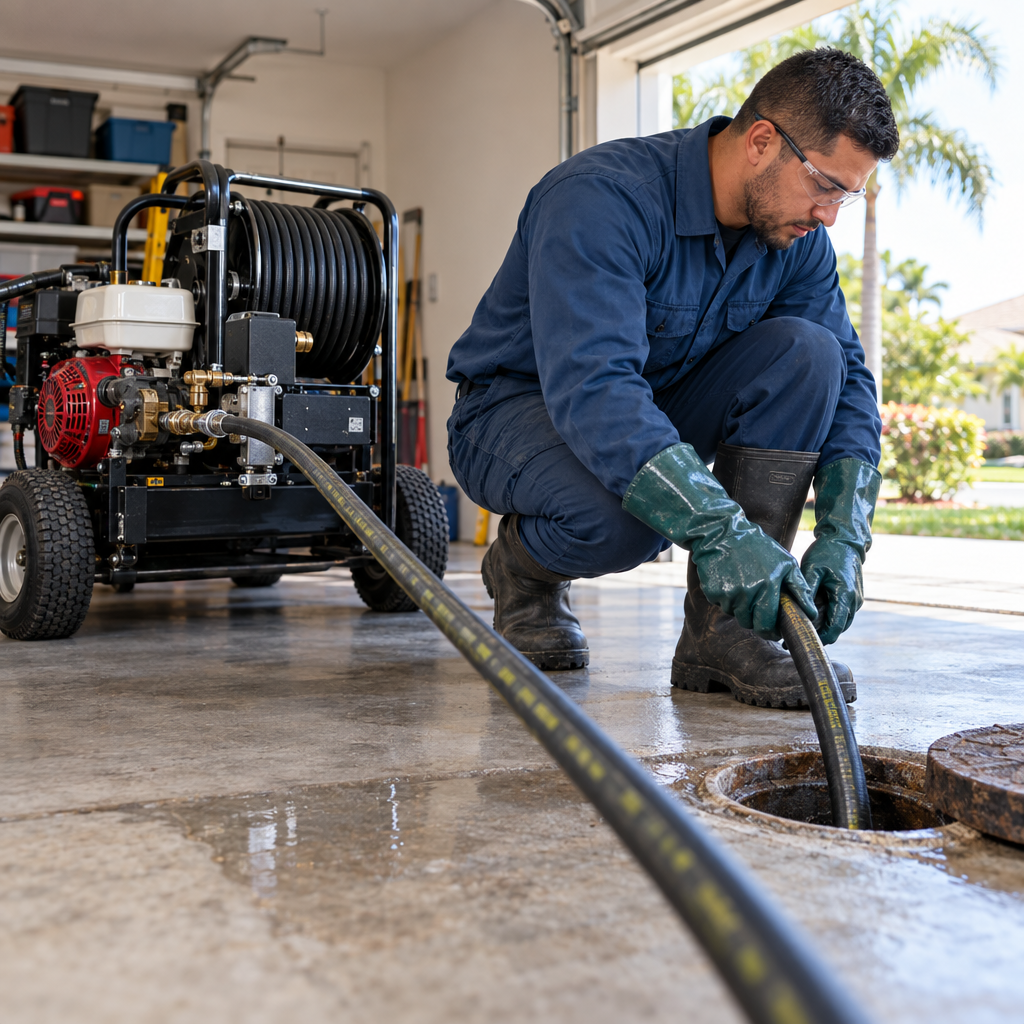
Leaks under the sink, water coming back through the dishwasher connection, and a disposal that trips power or jams repeatedly also deserve prompt attention. For restaurants, property managers, and commercial kitchens, recurring grease clogs can disrupt operations and create sanitation concerns. Professional drain cleaning or hydrojetting may be needed to clear the line thoroughly rather than punching a temporary opening through the buildup.
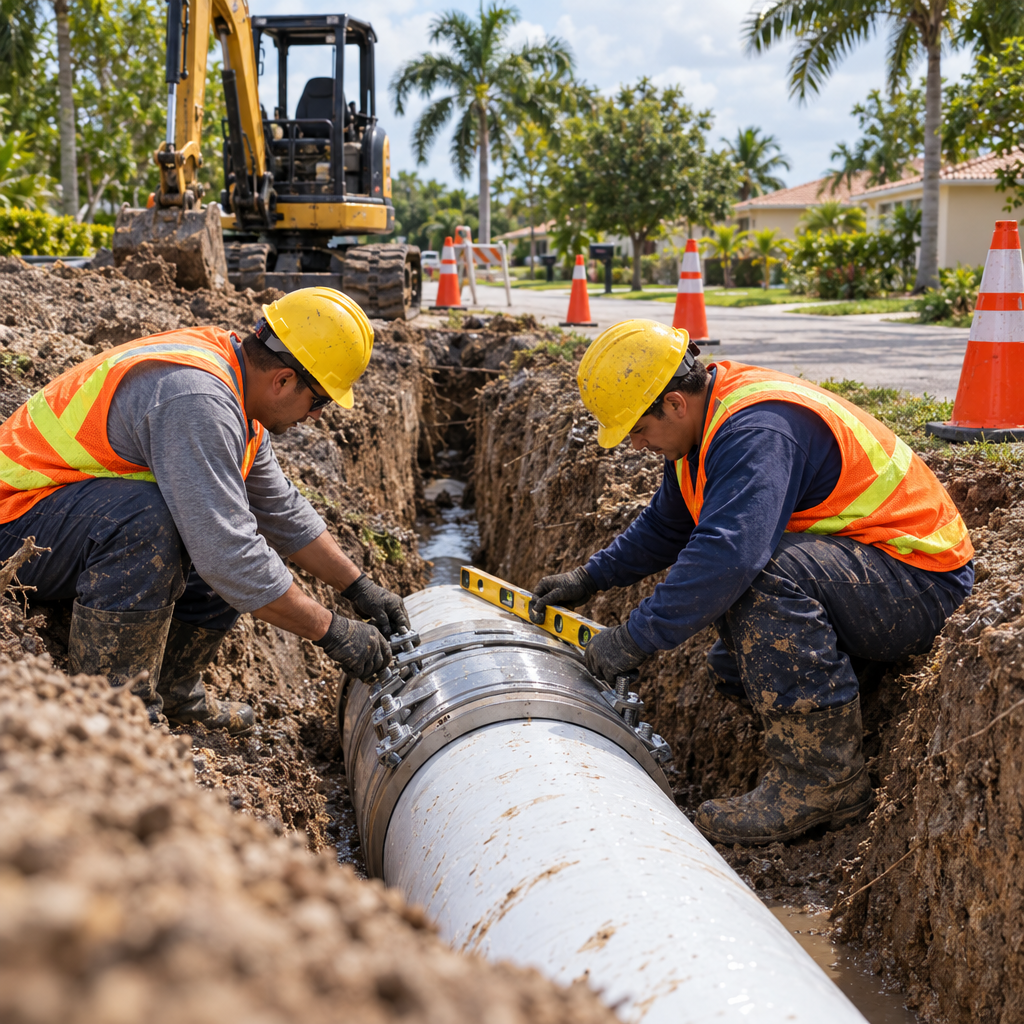
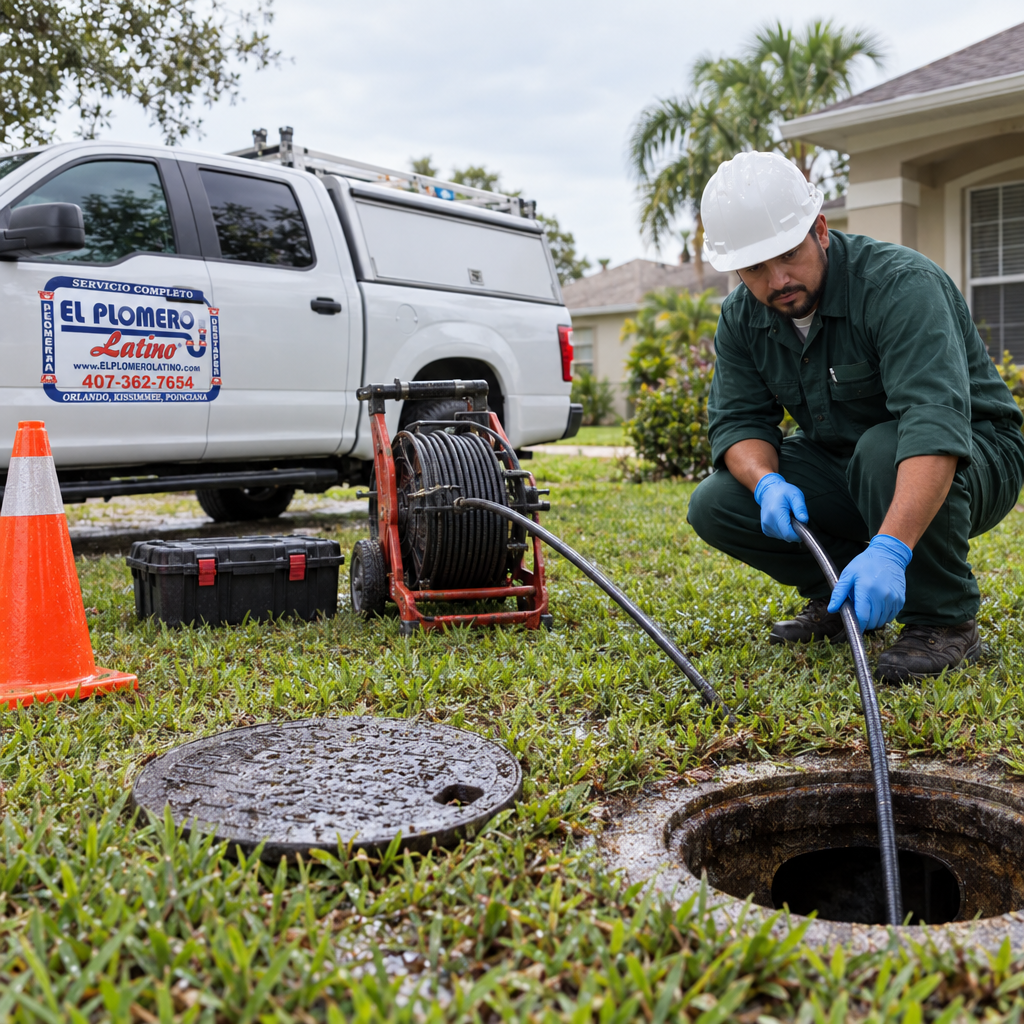
A licensed plumber can inspect the system, identify whether the obstruction is in the trap, branch drain, or sewer line, and recommend the right solution. In some cases, a sewer camera inspection can reveal grease accumulation, damaged pipe, root intrusion, or a sagging line that keeps collecting debris. That clarity matters because the right repair depends on the cause.
For homeowners and businesses in the Orlando area, El Plomero Latino Inc. provides clear recommendations, flat-rate upfront pricing, and respectful service when a kitchen drain problem goes beyond a simple DIY fix.
Keep the Sink Flowing After the Clog Is Gone
Once the drain is clear, use plenty of cold water when running the garbage disposal and let it run for several seconds after food has passed through. Scrape plates into the trash before rinsing them, collect grease in a disposable container, and flush the drain periodically with hot tap water and dish soap.
A kitchen sink that clogs once may only need better habits. A sink that clogs repeatedly is asking for a closer look. Addressing that warning early protects your plumbing, keeps your kitchen usable, and helps prevent a small inconvenience from becoming an after-hours emergency.