
A water heater usually gets attention only when the shower turns cold or water appears around the tank. That is exactly why a little preventive care matters. If you have searched “how to maintain water heater” before a problem starts, you are already taking the right approach: protecting your hot water, your utility bills, and your home from avoidable water damage.
For homeowners and property managers in Central Florida, maintenance is especially valuable. Mineral sediment in the water can build up inside tank-style units over time, while humidity and age can make small leaks harder to ignore. The goal is not to turn every homeowner into a plumber. It is to know which checks are safe to handle, what warning signs need a professional, and when replacement makes more sense than another repair.
How to Maintain Water Heater Systems: Start With Safety
Before checking a water heater, identify whether it is electric, gas, tankless, or a standard storage-tank model. The basic maintenance needs differ, but safety comes first with every type.
For an electric tank water heater, turn off power at the circuit breaker before removing an access panel or draining the tank. Do not rely only on the unit’s thermostat switch. For a gas water heater, do not work near the burner if you smell gas. Leave the area, avoid switches or open flames, and contact the gas utility or a qualified professional. Never cover combustion air openings, and do not store paint, gasoline, or other flammable materials beside a gas water heater.
Start with a visual inspection once every few months. Look for moisture around the base of the unit, rust on the tank or connections, corrosion around pipes, and signs of a slow drip from the temperature and pressure relief valve. Check the floor nearby as well. A small puddle may be a loose fitting, condensation, or a failing valve, but it can also be the first sign that a tank is rusting from the inside.
Keep the area around the unit clear and accessible. This makes leaks easier to spot and gives a plumber safe room to perform maintenance or emergency service when needed.
Flush Sediment From a Tank Water Heater
Sediment is one of the most common reasons a tank water heater becomes noisy, inefficient, or slow to recover. Minerals settle at the bottom of the tank, creating a layer that forces the heater to work harder. You may hear popping, crackling, or rumbling during a heating cycle. That sound is often water pushing through sediment, not a harmless quirk to ignore.
A newer tank water heater can often benefit from a flush about once a year. In areas with harder water, a professional may recommend more frequent service. However, the right schedule depends on the unit’s age, water conditions, and maintenance history.
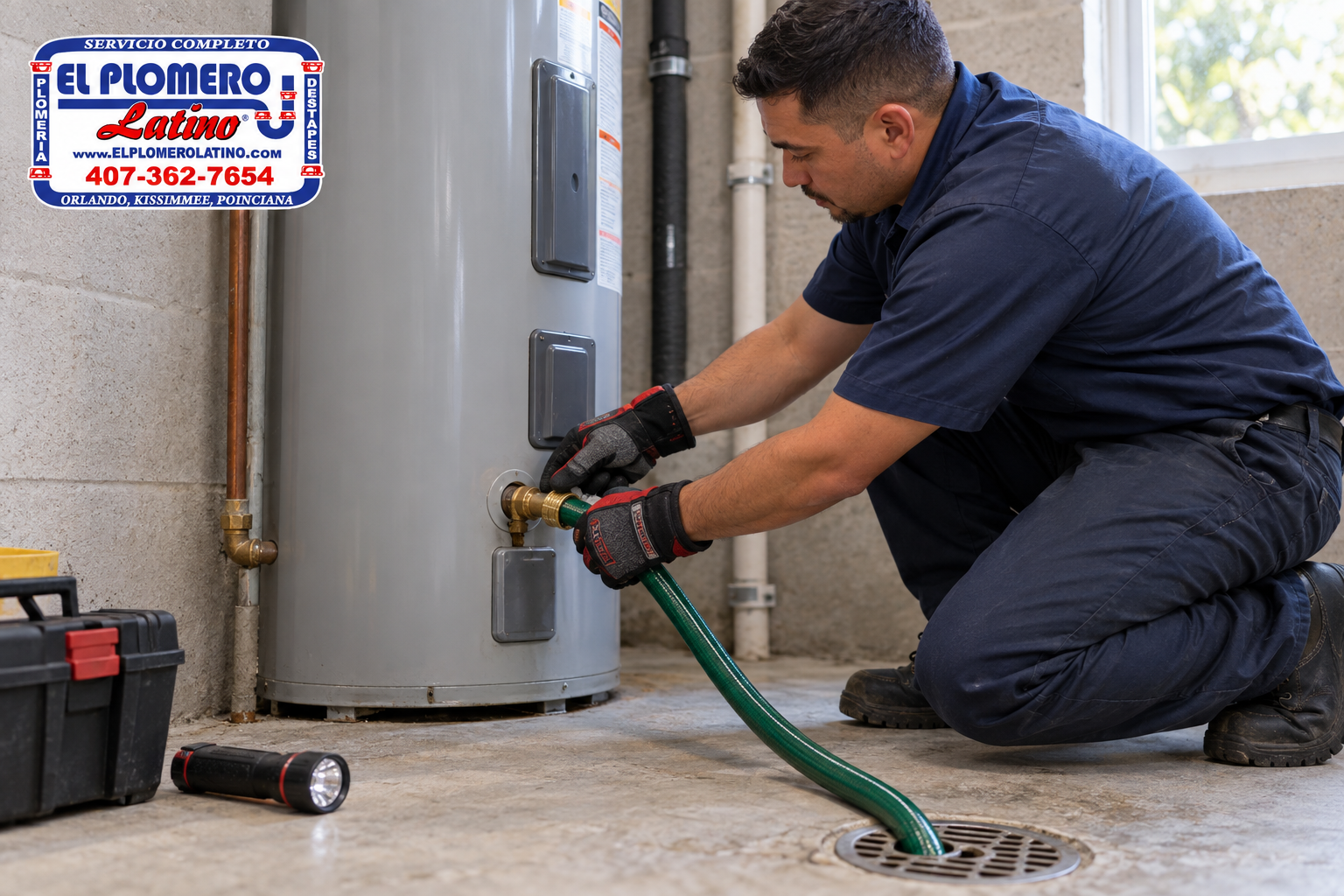
To flush a tank, power or gas must be shut off first, the cold-water supply is controlled, and water is drained through the drain valve into a safe location. The water coming out can be extremely hot, so this is not a job to rush. Once the tank has been flushed, it must be completely refilled before power is restored to an electric model. Energizing an electric heating element in an empty tank can burn it out quickly.
There is an important trade-off with older units. If a water heater has never been flushed and is already showing rust, leaking, or advanced corrosion, stirring up long-settled sediment can reveal problems that were already developing. That does not mean sediment should be ignored. It means an older unit deserves a professional assessment before flushing, especially if it is near the end of its expected service life.
Check the Relief Valve and Drain Line
Every tank-style water heater has a temperature and pressure relief valve, often called the TPR valve. It is a key safety device designed to release water if pressure or temperature inside the tank becomes dangerously high. The valve should have a discharge pipe that runs downward and ends near the floor. It should not be capped, plugged, or reduced in size.
Testing this valve is commonly included in annual maintenance, but old valves can stick or begin dripping after they are lifted. If you are unsure of the valve’s condition, or if there is no proper discharge pipe, have a licensed plumber inspect it. A valve that leaks continuously needs attention, and a valve that has been blocked or altered should be corrected promptly.
Also look at the water heater’s drain pan if it is installed in an attic, closet, garage, or another location where a leak could damage the home. The pan should be intact and connected to a working drain line where required. A pan helps direct water away, but it does not fix an active leak or replace a damaged water heater.
Inspect the Anode Rod Before Rust Wins
Inside most traditional tank water heaters is a metal anode rod. Its job is to corrode before the steel tank does. It is one of the least visible parts of the system, yet it can make a major difference in how long a water heater lasts.
An anode rod should generally be inspected after the first few years of service and checked periodically after that. The timing varies based on water quality and household water use. If the rod is heavily depleted, replacing it may help extend the life of the tank. Once the tank itself has rusted through, though, replacing the rod will not reverse the damage.
This inspection can be physically demanding because the rod is threaded into the top of the tank and may be difficult to remove. In tight closets, common in many homes, there may not even be enough overhead clearance to pull out a full-length rod. A professional can determine whether inspection or replacement is practical and whether the unit is worth investing in.
Give Gas and Electric Units Their Own Checks
Gas water heaters need clear, unobstructed venting. Look for loose vent connections, rusted sections, soot, or discoloration around the draft hood. Yellow or orange flames, instead of a steady blue flame, can indicate a combustion problem. These are professional service issues, not DIY adjustments.
Electric water heaters do not need venting, but they can develop failing heating elements, thermostat issues, or wiring concerns. Warning signs include lukewarm water, water that runs out unusually fast, tripped breakers, or inconsistent temperatures. Never remove electrical covers while the breaker is on.
Tankless water heaters avoid tank sediment, but they still need maintenance. Their heat exchangers can collect mineral scale, which reduces flow and heating performance. Most tankless systems need periodic descaling with the proper equipment and solution. The manufacturer’s recommended interval matters, but homes with mineral-heavy water may need service more often.
Watch for Signs Maintenance Is No Longer Enough
A well-maintained water heater can provide dependable service for years, but no unit lasts forever. Traditional tank water heaters often last around 8 to 12 years, though installation quality, water conditions, and maintenance make a difference. Tankless systems may last longer, but repairs and descaling still need to be considered.
Call for a professional inspection if you notice rusty hot water, a leak from the tank body, repeated relief-valve discharge, loud banging, a strong rotten-egg odor, no hot water, or a sudden increase in energy costs. For commercial properties, restaurants, and multi-unit buildings, it is wise to address these signs early. A failed water heater can interrupt operations, inconvenience tenants, and create expensive cleanup issues.
When a unit is old and needs a costly repair, ask for clear options. Repair may be the sensible choice when the issue is a valve, heating element, thermostat, or connection. Replacement may be the better long-term value when the tank is corroded, leaking, inefficient, or repeatedly failing. A trustworthy plumber should explain the difference plainly and provide upfront pricing before work begins.
Build a Simple Maintenance Routine
The most useful routine is one you will actually follow. Every few months, look for leaks and corrosion, keep the area clear, and listen for new noises. Once a year, arrange a full inspection and discuss flushing, relief-valve condition, anode rod condition, and any gas, electrical, or venting concerns.
For Orlando-area homes and businesses, El Plomero Latino Inc. can help assess the condition of your water heater and recommend honest next steps, whether that means maintenance, repair, or replacement. A few planned checks today can help keep hot water dependable when your family, tenants, or customers need it most.