


The water is rising, the flush is still running, and every second feels expensive. Knowing how to stop toilet overflow before water reaches the floor can protect your bathroom, flooring, and peace of mind. The first goal is simple: stop more water from entering the bowl. Do not flush again to “see if it clears.” That is how a manageable clog becomes a cleanup and repair job.
How to Stop Toilet Overflow Right Away
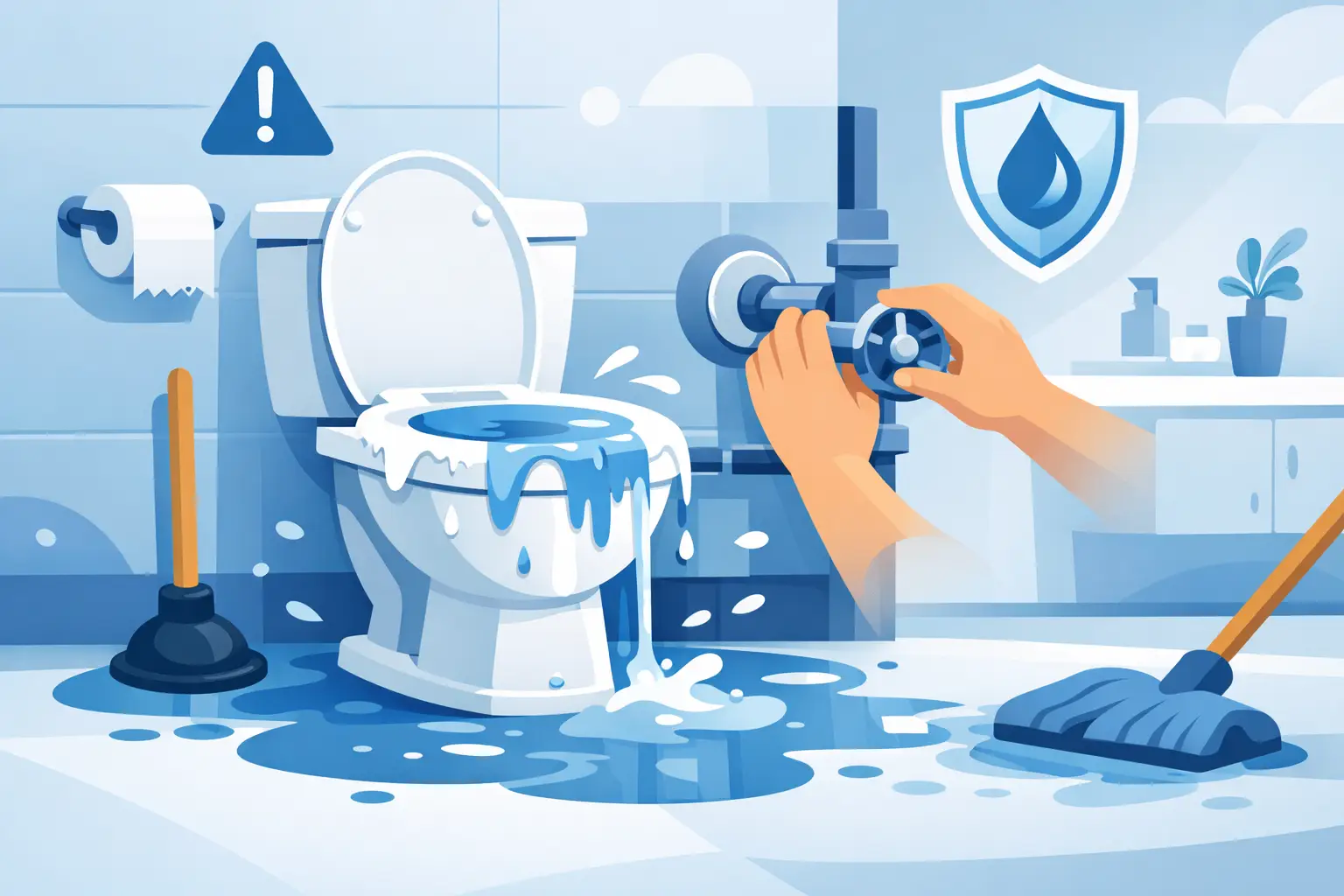
Start by removing the tank lid carefully and setting it on a towel or flat surface. Porcelain lids crack easily. Look inside the tank for the rubber flapper at the bottom. Push it closed firmly if it is open. This stops tank water from flowing into the bowl.
Next, turn off the toilet’s water supply valve. It is usually on the wall or floor behind the toilet, connected to a small supply line. Turn the valve clockwise until it stops. If the valve is stiff, do not force it hard enough to break it. Closing the flapper is the faster emergency move, and shutting off the supply gives you control while you address the problem.
If water is already near the rim, use a bucket, small container, or cup to remove some water from the bowl. Put dirty water into a separate bucket, not into the sink or bathtub. Place towels around the base of the toilet to keep water from spreading, especially if it has reached grout lines, baseboards, or flooring seams.
If the overflow contains wastewater, keep children and pets out of the area. Wear gloves during cleanup, avoid touching your face, and disinfect affected hard surfaces afterward. If water has soaked into carpet, drywall, cabinetry, or under flooring, a professional assessment may be necessary to prevent moisture damage and sanitation concerns.
Figure Out Why the Toilet Is Overflowing
Most toilet overflows come from one of two situations: a blocked drain or a problem inside the tank. The next step depends on what you see.
If the bowl fills after flushing but drains slowly or not at all, the blockage is usually in the toilet trap or drain line. Common culprits include excess toilet paper, wipes labeled “flushable,” paper towels, feminine hygiene products, toys, or a buildup farther down the pipe. A bowl that is high but slowly dropping is still a clog warning. Wait until the water level has gone down before attempting any clearing method.
If water continues running into the bowl even when nobody flushes, the issue may be the fill valve, float, or flapper. The float is meant to stop the tank from filling once it reaches the correct level. When it fails or is set too high, water can keep entering the tank and flowing through the overflow tube. In that case, keeping the supply valve off prevents another overflow until the toilet is repaired.
There is a third possibility that deserves quick attention: several plumbing fixtures are backing up or draining slowly at the same time. For example, flushing the toilet causes water to rise in the tub, or a toilet overflow happens along with gurgling drains. That can point to a blockage in the main sewer line rather than the toilet itself. A plunger will not solve a main line obstruction.
Clear a Simple Clog Safely
Only begin clearing the toilet after the bowl has enough room to work without overflowing again. Use a flange plunger, not a flat sink plunger. A flange plunger has a soft rubber sleeve that folds out and seals around the toilet drain opening.
Set the plunger over the opening and make sure it is covered by water. Start with a few gentle pushes to release trapped air, then use steady, controlled strokes for about 15 to 20 seconds. The goal is to create pressure and suction, not to splash the bathroom. Lift the plunger at the end and watch the water level.
If the water drains normally, restore the water supply and let the tank refill. Then perform one test flush only. Stay nearby and be ready to close the flapper or shut off the supply if the bowl rises again. A successful flush means the clog was likely near the toilet trap.
If plunging does not work after a couple of attempts, use a toilet auger. This tool is designed to travel through the toilet’s curved trap without damaging the porcelain. Feed the protected end into the bowl opening, turn the handle slowly, and pull it back out. Do not use a standard drain snake meant for sinks unless it is specifically safe for toilets. It can scratch the bowl or become stuck.
Avoid chemical drain cleaners. They often fail to break up toilet clogs, can damage certain plumbing materials, and create a hazard for anyone who later works on the drain. Never combine chemical cleaners with another product, and do not plunge after adding chemicals because the liquid can splash back onto skin or into eyes.
When a Toilet Plunger Is Not Enough
A toilet that repeatedly clogs, overflows without an obvious cause, or backs up along with other drains needs a closer look. The blockage may be farther down the branch line, in the sewer line, or caused by tree roots, pipe damage, accumulated grease, or a foreign object lodged where a homeowner’s tool cannot reach.
Call a licensed plumber promptly if you notice any of these signs:
- Water backs up into a shower, tub, or another toilet when one fixture is used.
- More than one drain is slow, gurgling, or producing sewer odors.
- The toilet overflows again after plunging or augering.
- Sewage has entered living areas, carpet, walls, or cabinets.
- The toilet is loose at the floor, leaking around its base, or has a cracked bowl or tank.
For homes and businesses, identifying the real source matters more than forcing a temporary fix. A sewer camera inspection can show whether the issue is roots, a broken line, a heavy blockage, or an object in the pipe. This helps avoid unnecessary repairs and gives you a clear path forward.
What Not to Do During an Overflow
The most costly mistake is flushing repeatedly. Each flush introduces more water into a drain that is already blocked. Do not hold the handle down, and do not assume the problem will correct itself after a few minutes.
Do not use boiling water in a toilet. Sudden heat can crack porcelain, and hot water may not clear a serious blockage anyway. Warm water can sometimes help soften minor organic buildup, but it should never be your first move when the bowl is close to overflowing.
It is also wise not to remove the toilet from the floor as a DIY attempt to reach a clog. A toilet must be resealed correctly with a new wax ring or approved gasket. Improper reinstallation can lead to hidden leaks, sewer gas odors, and damage around the base.
Prevent the Next Toilet Overflow
A few household habits prevent many emergency calls. Flush only toilet paper and human waste. Even products marketed as flushable can collect in pipes, particularly in older homes or plumbing systems with low-flow fixtures. Keep a covered trash can within easy reach so wipes, cotton swabs, dental floss, and hygiene products do not end up in the bowl.
Pay attention to early signals. A toilet that needs frequent plunging, flushes weakly, or gurgles is asking for service before it becomes an overflow. In Central Florida, properties with mature landscaping can also face root intrusion in sewer lines. Routine drain cleaning or camera inspection can be a practical investment when backups keep returning.
For restaurants, offices, rental properties, and other commercial spaces, clear restroom signage and regular maintenance are especially valuable. A single overflow can interrupt business, create a slip hazard, and affect customers or tenants. Fast action is necessary, but a reliable long-term repair is what keeps the problem from returning.
When the water will not stay down, you do not have to guess at the cause. El Plomero Latino Inc. provides straightforward plumbing support for Orlando-area homes and businesses, with clear communication, flat-rate upfront pricing, and service focused on getting the job done right. Stop the water first, protect the area, and get qualified help before a small backup turns into a larger repair.